Name
George Prince
19 Jan 1897
Conflict
First World War
Date of Death / Age
16/04/1918
21
Rank, Service Number & Service Details
Private
41532
South Staffordshire Regiment
4th Bn.
Awards: Service Medals/Honour Awards
British War and Victory medals
Cemetery/Memorial: Name/Reference/Country
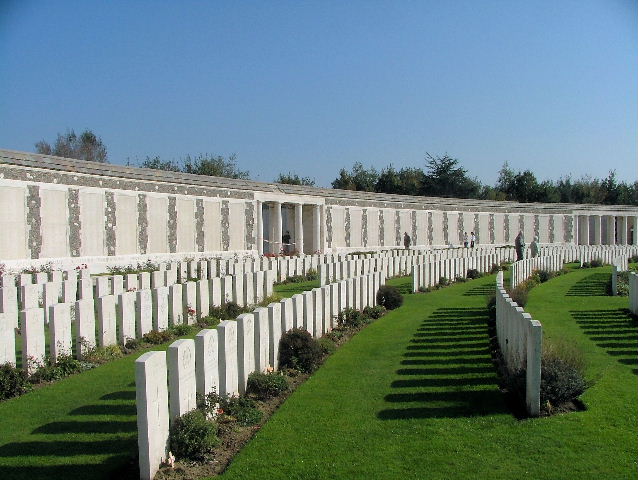
TYNE COT MEMORIAL
Panel 90 to 92 and 162 to 162A.
Belgium
Headstone Inscription
NA
UK & Other Memorials
Not on the Letchworth memorials, Plaque, St Michael and All Angels Church, Shefford, Beds., Obelisk memorial, Shefford, Beds.,
Pre War
George Prince was born in Kentish Town, Middx., to Alfred Prince, and Martha (nee Jones).
On the 1891 Census the family of parents (father was Sergeant, Metropolitan Police), Joseph (born 1886), Henry (born 1889), Mabel Martha (born 1890) were living at 37, Bonnington Square, Lambeth, Surrey.
On the 1901 Census the family of parents (father was a police inspector), Joseph Alfred (carpenter/joiner), Henry, Mabel Martha and George were living at 4, Church Road, Battersea.
George attended Knights Templar School on 18 May 1908, his address recorded as 32, Pix Road and amended to 161, Baldock Road, Sunnymede.
On the 1911 Census George was a cycle shop assistant living with his family of parents, Henry (publisher’s clerk), Mabel (dressmaker) at Pixmore Cottages, Baldock Road, Letchworth, Herts.
His parents came to live at 'Grendon', Clifton Fields, Clifton, Shefford, Beds.
Wartime Service
No Service Record was found for George who had enlisted in 1916 in the Royal Flying Corps as Private 13036. On 23 Sep 1917 he was transferred into 8th (Service) Battalion, South Staffordshire Regiment, but was probably soon transferred to a Training Battalion such as their 3rd (Reserve) Batallion for infantry training. The 4th (Extra Reserve)Battalion had been sent to France in Oct 1917 to become part of 7th Brigade, 25 Division.
In 1918 the Division moved to the area north west of Bapaume on 13 Feb as reserve Division to IV Corps. Rumours of an impending enemy attack grew, 74th and 75th Brigades moved up closer to the front, at Fremicourt and Biefvillers respectively. The rumours became the German Spring Offensive and at the Battle of St Quentin (21-23 Mar) the units of the Division were ordered to reinforce other sorely pressed formations in a piecemeal fashion. 7th Brigade moved up as support and took up position at Fremicourt. The fighting continued in to the 1st Battle of Bapaume (24-25 Mar)
The defensive fighting was continuous and confusing, as enemy units pushed forward on all sides. On 26 Mar the Division carried out a fighting withdrawal and itself on the 1916 Somme battlefield. On that date, the Division was finally relieved and moved to Pommier and thence to Couin. By 28 Mar, the Division were south of Doullens and out – for the moment – of harm’s way. The Division was desperately tired, having been in continuous action. It had also lost more than half its fighting strength: 318 officers and men dead, 1496 wounded and 1588 missing, many taken prisoner. The Division moved to the Ploegstreet area in time to meet another German Offensive (the Battles of the Lys) at Estaires (9-11 Apr), Messines (10-11 Apr), Bailleul (13-15 Apr),1st Kemmel (17-19 Apr).
It was in this last action in which the Germans were repulsed that William was reported killed on 16 Apr 1918, his remains were not recovered and he is remembered in the Tyne Cot Memorial, Ypres.
Additional Information
War Gratuity of £11 and arrears of £2 14s 9d was paid to his father.
Acknowledgments
Neil Cooper
Jonty Wild