Name
William John Pluck
1893
Conflict
First World War
Date of Death / Age
26/04/1918
26
Rank, Service Number & Service Details
Private
42877
South Staffordshire Regiment
4th Bn.
Awards: Service Medals/Honour Awards
British War and Victory medals
Cemetery/Memorial: Name/Reference/Country
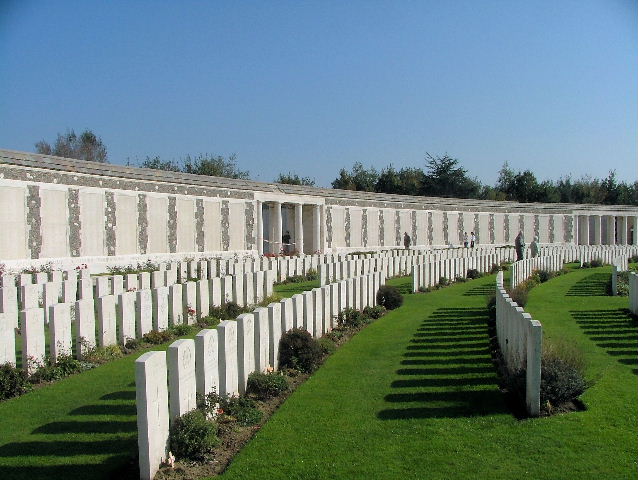
TYNE COT MEMORIAL
Panel 90 to 92 and 162 to 162A.
Belgium
Headstone Inscription
NA
UK & Other Memorials
Church of St Nicholas Memorial, Norton, Letchworth Town Memorial
Pre War
William John Pluck was born in 1893 (baptised 2 Apr 1893) in Linton , Cambs., to William Pluck, carpenter/joiner, and Ellen nee (Dean).
On the 1901 Census the family of parents, Edith (born 1889), Alice (born 1890) and William were living at Mill Lane, Linton, Cambs.
On the 1911 Census William was a baker and confectioner ,Notts the Baker. (living as a boarder, together with Harvey Nelson Aves(born 1888) also a baker & confectioner at 18, Station Road, Letchworth with the family of Joseph & Mary Ann Knight, their daughter Dorothy and boarder Charles Joseph Mason (cycle mechanic). His parents were living at Mill Lane, Linton, Cambs.
William married Amelia Jane Craft in Hitchin District in 1912. There would be 2 children William Reginald (born 8 Jul 1913) & Joyce Audrey (born 28 Aug 1918). They lived at 4, Rushby Mead, Letchworth, Herts. William’s mother later lived at 27, Glebe Rd., Letchworth, Herts.
Wartime Service
No Service Record was found for William who had enlisted in 1916 in the Essex Regiment as Private 35507. At some time he was transferred into 4th (Extra Reserve) Battalion, South Staffordshire Regiment. He may have landed with the Battalion at Le Havre in Oct 1917 and became part of 7th Brigade, 25 Division.
In 1918 the Division moved to the area north west of Bapaume on 13 Feb as reserve Division to IV Corps. Rumours of an impending enemy attack grew, 74th and 75th Brigades moved up closer to the front, at Fremicourt and Biefvillers respectively. The rumours became the German Spring Offensive and at the Battle of St Quentin (21-23 Mar) the units of the Division were ordered to reinforce other sorely pressed formations in a piecemeal fashion. 7th Brigade moved up as support and took up position at Fremicourt. The fighting continued in to the 1st Battle of Bapaume (24-25 Mar).
The defensive fight was continuous and confusing, as enemy units pushed forward on all sides. On 26 Mar the Division carried out a fighting withdrawal and itself on the 1916 Somme battlefield. On that date, the Division was finally relieved and moved to Pommier and thence to Couin. By 28 Mar, the Division were south of Doullens and out – for the moment – of harm’s way. The Division was desperately tired, having been in continuous action. It had also lost more than half its fighting strength: 318 officers and men dead, 1496 wounded and 1588 missing, many taken prisoner. The Division moved to the Ploegstreet area in time to meet another German Offensive (the Battles of the Lys) at Estaires (9-11 Apr), Messines (10-11 Apr), Bailleul (13-15 Apr),1st Kemmel (17-19 Apr), 2nd Kemmel (25-26 Apr).
25th Division was ordered to reinforce and counter attack under orders of the French 2nd Cavalry Corps. The attack went in at 3am on 26 Apr after a heavy overnight fall of rain. Assisted by fog but held up by the flooded Kemmelbeek, the objectives were captured although the line of the railway could not be held and the troops consolidated. Casualties were light at first but heavier in the withdrawal from the railway position. The Divisions to the left and right fared less well, leaving 25th Division holding a narrow sector including the Le Clytte (De Klijte) – Kemmel road. It was in this action that William was rported killed, his remains were not recovered and he is remembered in the Tyne Cot Memorial, Ypres.
Additional Information
War Gratuity of £5 and arrears of £1 12s 6d was paid to his widow Amelia.
Acknowledgments
Neil Cooper
Dan Hill, Ellen Barnes, Jonty Wild