Name
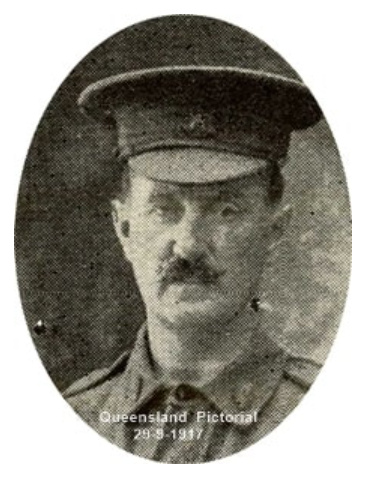
Donald Colin MacNiven
Conflict
First World War
Date of Death / Age
06/02/1918
Rank, Service Number & Service Details
Private
6617
Australian Infantry, A.I.F.
25th Bn.
Awards: Service Medals/Honour Awards
Not Yet Researched
Cemetery/Memorial: Name/Reference/Country
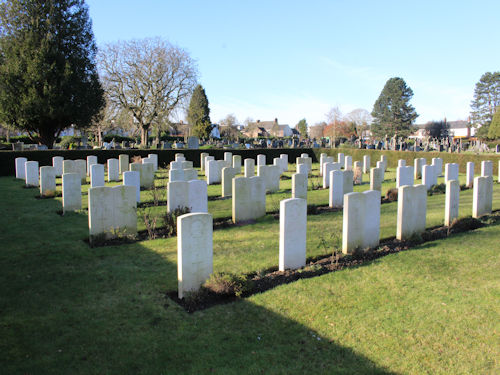
ST. ALBANS (HATFIELD ROAD) CEMETERY
Mil. B. 4.
United Kingdom
Headstone Inscription
Not Researched
UK & Other Memorials
Not on the St Albans memorials (*1)
Pre War
Biography
Donald Colin MacNiven was born at Inveraray, Argyllshire, Scotland on 30th March, 1873 to parents Duncan & Isabella MacNiven (nee MacLullich).
The 1881 Scotland Census recorded Donald C. McNiven as an 8 year old Scholar, living with his family at National Bank Scotland, Fort Willia, Kilmallie, Argyll, Scotland. His parents were listed as Duncan McNiven (Solicitor & Bank Agent, aged 52, born Kilmadock, Perthshire) & Isabella McNiven (aged 45, born Inveraray, Argyllshire). Donald was one of seven children listed on this Census – Annie McNiven (aged 21, born Inveraray, Argyllshire), Duncan McNiven (Scholar, aged 15, born Inveraray, Argyllshire), John E. McNiven (Scholar, aged 13, born Inveraray, Argyllshire), James McNiven (Scholar, aged 12, born Inveraray, Argyllshire), then Donald, William McNiven (Scholar, aged 5, born Kilmallie, Invernessshire) & Elizabeth B. McNiven (aged 3, born Kilmallie, Invernessshire).
Donald Colin MacNiven attended Royal High School, Edinburgh & Edinburgh University, Scotland.
The 1891 Scotland Census recorded Donald Colin McNiven as an 18 year old Law Clerk Apprentice, living with his family at 4 High Street, Kilmallie, Argyll, Scotland. His father was listed as Duncan McNiven (Irocurator, Notary Public & Irocurator – Fiscal, aged 61). Also listed were two of Donald’s sisters – Isabella Colina McNiven (aged 27) & Elizabeth B. McNiven (Scholar, aged 13). Three servants were also listed – Isabella Macdonald (Laundry – Maid Domestic Servant, aged 24), Elizabeth Macdonald (Housemaid – Domestic Servant, aged 18) & Catharine Macdonald (Cook – Domestic Servant, aged 26).
Donald Colin Macniven joined Cameron Highlanders for a period of 1 year on 14th March, 1900. He was aged 26 years & 11 months & a Clerk. He stated he had served with E Company, 1st Volunteer Battalion, 20th Cameron Highlanders.
Private Donald Colin Macniven, Service number 6300, was on Home service from 14th March, 1900 to 13th April, 1900. He served with Cameron Highlanders in the South African War from 14th April, 1900 to 28th April, 1911. Private Macniven was on Home Service from 29th April, 1901 until 29th May, 1901 when he was discharged at his own request.
Private Donald C. Macniven, Service number 6300, was entitled to the following medals for his service during South African War 1899 – 1902: Wittenbergen & Cape Colony.
The 1901 Scotland Census recorded Donald Mcniven as a 28 year Wood Culter boarding at Kilnaish Farm House, Kilberry, Argyll, Scotland. Duncan Currie (Farmer, aged 41) was listed as head of the house. Also listed was his wife Mary Currie (aged 47), his stepson – Donald Leitch (Carting Contractor, aged 27), his two sons – Duncan Currie (Scholar, aged 10) & John Curried (Scholar, aged 8) & his daughter – Christina Mary Currie (Scholar, aged 6). Also listed was his step-daughter – Betsy Wotherspoon (Seaman’s wife, aged 9) & his grandson – Malcolm Leitch Wotherspoon (aged 8 months).
[Note: The actual images for the 1881, 1891 & 1901 Scotland Censuses were not viewed. Information was taken from transcriptions of these Censuses on Ancestry – of which there are errors.]
Duncan MacNiven, father of Donald Colin MacNiven, died at Kilmallie, Inverness, Scotland on 24th August, 1904.
According to information provided by his brother for the Roll of Honour – Donald MacNiven came to Australia when he was about 30 years old. He also recorded that Donald MacNiven had served in Territorial Force in Scotland & had served with Cameron Highlanders through South African War.
A “Donald C. McNiven” was listed as a passenger on Ormuz which departed from the port of London, England on 14th May, 1909. He was contracted to land at Sydney, New South Wales, Australia.
The 1913 Australian Electoral Roll for the division of Maranoa, subdivision of Roma, Queensland recorded Donald Colin McNiven, Railway Employee, of Roma.
The 1914 Australian Electoral Roll for the division of Maranoa, subdivision of Roma, Queensland recorded Donald Colin MacNiven, Railway Clerk, of Queensland Hotel, Roma.
The 1916 Australian Electoral Roll for the division of Herbert, subdivision of Townsville, Queensland recorded Donald Colin Macniven, Railway Clerk, of Taylor’s Hotel.
Donald Colin MacNiven stated he was a 39 year old, single, Clerk from Townsville, Queensland when he enlisted on 11th December, 1916 with the Australian Imperial Force (A.I.F.) at Townsville, Queensland. His religion was Presbyterian & his next of kin was listed as his brother – Mr D. MacNiven, Solicitors Bank, National Bank of Scotland Buildings, Fort William, Invernesshire, Scotland. Donald MacNiven stated on his Attestation Papers that he had served with 79th Cameron Highlanders for 18 months until end of war in South Africa. (Note: Donald MacNiven listed his date of birth on his Attestation Papers as “30.3.1877.”) He had been medically examined at Townsville, Queensland on 5th December, 1916 & was marked “requires extensive dental treatment.”
Private Donald Colin MacNiven was posted to 11th Depot Battalion, Frasers Camp, Enogerra on 15th December, 1916 for recruit training. He was transferred to 19th Reinforcements of 25th Battalion on 28th January, 1917.
Private Donald Colin MacNiven, Service number 6617, embarked from Sydney, New South Wales on HMAT Wiltshire (A18) on 8th February, 1917 with the 25th Infantry Battalion, 19th Reinforcements & disembarked at Plymouth, England on 11th April, 1917. (Note: “Disembarked at Plymouth” as listed on Casualty Form – Active Service, however the Statement of Service form recorded he disembarked at “Devonport, England.”)
25th Battalion
The 25th Battalion was raised at Enoggera in Queensland in March 1915 as part of the 7th Brigade. Although predominantly composed of men recruited in Queensland, the battalion also included a small contingent of men from Darwin. .....
After further training in Egypt, the 25th Battalion proceeded to France. Landing on 19 March 1916, it was the first AIF battalion to arrive there.
(Extract of Battalion information from the Australian War Memorial)
Reinforcements were only given basic training in Australia. Training was completed in training units in England. Some of these were located on the Salisbury Plain & surrounding areas in the county of Wiltshire & also the county of Dorset.
Private Donald Colin MacNiven was marched in to 7th Training Battalion at Rollestone, Wiltshire on 11th April, 1917 from Australia.
Private Donald Colin MacNiven was written up for an Offence while posted at Rollestone: A.W.L. (Absent without Leave from midnight on 14th May, 1917 to 9.30 pm on 16th May, 1917. This was admonished by Captain G. Glyde & he forfeited 2 days pay.
Private Donald Colin MacNiven was sent sick then admitted to Fargo Military Hospital, Wiltshire on 29th June, 1917 – cause N.Y.D. (not yet determined). Another entry on Casualty Form – Active Service recorded “Nasal operation.” (The Hospital Admissions form listed “inflammation of soft parts of nose.) He was discharged to Training Depot on 4th July, 1917 & was marched into 7th Training Battalion at Rollestone on 6th July, 1917.
Private Donald Colin MacNiven was written up for an Offence on 24th July, 1917 while posted at Rollestone: “Neglect to the prejudice of good order & military discipline in that he at Rollestone on 23.7.17 whilst on Bn Quarter Guard, when given leave of absence for 10 mins neglected to report back for 1 hour.” He was awarded a forfeiture of 2 days pay on 24th July, 1917.
Private Donald Colin MacNiven was A.W.L. (Absent without Leave) from 7th Training Battalion from 13th August, 1917 & returned from A.W.L. on 18th August, 1917. As a result of being A.W.L. Private MacNiven was written up foran Offence on 20th August, 1917 – “A.W.L. from midnight 13.8.17 till 2.15 pm on 18.8.17.” He was awarded a total forfeiture of 15 days pay.
A Medical Report was completed on Private Donald Colin MacNiven, aged 44, on 22nd August, 1917 at 7th Training Battalion, Rollestone, Wiltshire. His disability was listed as Bunions which had originated in Australia prior to enlistment. Private MacNiven was “not able to do route marches & has to wear special boots. Also owing to old fracture of L wrist cannot do bayonet work.” Private MacNiven’s present condition was recorded as “looks his age. Is a little deaf in L ear....Marked bunions both feet v. ___ to pressure. Cant wear the ordinary issue boot intermittent (?) agony.” The officer in charge of the medical case recommended that Private MacNiven be discharged as permanently unfit. The Medical Board decided that Private Donald Colin MacNiven was permanently unfit for General Service but fit for Home Service.
Private Donald Colin MacNiven was marched out from 7th Training Battalion at Rollestone on 20th September, 1917 & was marched in to No. 2 Command Depot at Weymouth, Dorset on the same day.
Private Donald Colin MacNiven was temporarily attached for duty with Australian Army Pay Corps in London from 5th October, 1917 ex 25th Battalion & No. 2 Command Depot at Weymouth. He was marched in to Administrative Headquarters, London on 5th October, 1917 for duty with Finance Section. Private MacNiven was detached from duty & was marched out to No. 2 Command Depot on 9th October, 1917. He was marched in to No. 2 Command Depot, Weymouth on 10th October, 1917 from Administrative Headquarters, London.
Private Donald Colin MacNiven was written up for an Offence at Weymouth on 11th October, 1917 – On 10th October, 1917 “(1) Neglect to obey Garrison order 1.5.17 para 2310 in that he was found in Weymouth at 9.50 pm without a pass. (2) Conduct to the prejudice of good order & military discipline in that he did urinate in Public thoroughfare on 10.10.17 at Weymouth.” He was awarded 7 days Field Punishment No 2 by Major C. C. Campbell.
Private Donald Colin MacNiven was A.W.L. on 5th November, 1917 & returned from A.W.L. on 6th November, 1917. As a result of being A.W.L. Private MacNiven was written up for an Offence at Littlemoor: “A.W.L. from 2 pm on 5.11.17 to noon.” He was awarded 5 days Field Punishment No 2 & a total forfeiture of 7 days pay.
Private Donald Colin MacNiven reported sick to Napsbury War Hospital on 24th December, 1917.
Private Donald Colin MacNiven died at 9 pm on 6th February, 1918 at County of Middlesex War Hospital, Napsbury, St. Albans, England from General Paralysis of the Insane.
[General Paralysis of the Insane (GPI), or dementia paralytica, was a terminal neuropsychiatric disease, often termed a "disease of civilization," that was highly prevalent in the early 20th century. During World War I, it was a significant cause of psychiatric admission, often acting as a fatal complication of untreated syphilis, with symptoms including cognitive decline, delusions of grandeur, and progressive, fatal physical paralysis.
Fatal Course: Before effective treatment, it was inevitably fatal, with patients dying 3–5 years after admission, usually in a state of complete paralysis and dementia.
Treatment Milestone: In 1917, during the war, Austrian psychiatrist Julius Wagner-Jauregg pioneered malaria fever therapy for GPI, injecting patients with malaria to induce high fevers that killed the syphilis bacteria. This breakthrough, which significantly improved survival rates, earned him the Nobel Prize in 1927.]
A death for Donald C. Macniven, aged 45, was registered in the March quarter, 1918 in the district of St. Albans, Hertfordshire, England.
Private Donald Colin MacNiven was buried at 2 pm on 9th February, 1918 in Hatfield Road Cemetery, St. Albans, Hertfordshire, England – Plot number B. 4 Section S.C.
From the burial report of Private Donald Colin MacNiven - Coffin was good. Polished Elm with brass fittings. The deceased soldier was accorded a Military Funeral. The coffin was draped with the Union Jack Flag. A beautiful wreath was placed on the coffin by the brother and sister-in-law (Mr and Mrs Macniven). Gun Carriage was suppled by the 309th Coy A.S.C. stationed at St. Albans and the Firing Party and Buglers by the Administrative.
Headquarters, A.I.F. London. The “Last Post” was sounded at the graveside. Prior to the interment a service was held in the Cemetery Chapel by Chaplain Shannon of the A.I.F. The grave will be turfed and particulars duly inscribed on the Roll of Honour in the Cemetery. Administrative Headquarters, A.I.F. London were represented at the funeral.
Names of relatives or friends present at the Funeral – Brother and Sister-in-law – Mr & Mrs Macniven of Fortwilliam, Scotland and Nephew – Mr J. Barton Williams, 40 Wesleys Road, Birmingham.
Private Donald Colin MacNiven’s burial place is now recorded by CWGC as Mil. B. 4 and he now has a Commonwealth War Graves Commission headstone.
Private Donald Colin MacNiven requested in his Will dated 18th July, 1917 that he bequeathed his deferred pay to his sister Miss Ella Colina MacNiven, The Grange, Fort William, North Britain.
Private Donald Colin MacNiven requested in his Will dated 16th August, 1917 that “...do hereby leave and bequeath all I possess after my death, more especially any sim of money due to me by the Commonwealth of Australia for military services, to Ella Colina Macniven The Grange, Fortwilliam, for her sole use and benefit after my death...”
Duncan Macniven, The National Bank of Scotland Buildings, Fort William replied to Base Records on 21st August, 1918 with the following: “I have received your letter of 17th June last enclosing photograph and description of the locality of the grave of my late brother No. 6617 Private D. C. McNiven, 25th Battalion.
I note that the erection of permanent Memorials are not at present permitted, but I may make such application after the conclusion of hostilities as directed to the Director of Graves Registration and enquiries War Office, Winchester House, St. James Square, London S.W.
The sole next-of-kin are my sister, Miss E. C. Macniven, The Grange, Fort William, and myself, sister and brother respectively. I very much appreciate the arrangements made as to the planting of flowers and shrubs and the care of the grave.”
The Public Curator’s Office, Brisbane, Queensland wrote to Base Records on 20th September, 1918 requesting a Certificate of Death of 6617 Private D. C. MacNiven, 25th Battalion.
Base Records replied to The Public Curator, Brisbane, Queensland on 7th October, 1918 enclosing a certificate of report of the death of the late No. 6617, Private D. C. Macniven, 25th Battalion.
Base Records wrote to Headquarters, 1st District Base, Victoria Barracks, Brisbane, Queensland on 31st May, 1921 with the following: “The late No. 6617 Private Donald Colin MACNIVEN, 25th Battalion, upon enlistment recorded as next of kin his brother, Mr Duncan Macniven, Solicitor & Bank Agent, National Bank of Scotland Buildings, Fort William, Invernesshire, Scotland, but it is noted that the burial and funeral report shows “Next of kin, wife, no name given on attestation paper, address Toowoomba, Qld.”
As I desire to dispose of War Medals etc., issuable on account of the abovementioned late soldier’s service, I shall be obliged if you can favour me with the present address of deceased’s widow. If the information is not available from local records, will you kindly arrange for enquiries to be made with a view of ascertaining her present whereabouts, also whether she is entitled to these items. The favour of early attention is requested.”
Administrative Staff, 1st District Base, Brisbane, Queensland replied to Base Records on 24th June, 1921 with the following: “With reference to your memo. of the 31st May, 1921, relative to the next-of-kin of the late No. 6617 Private Donald Colin MacNiven, 25th Battalion, A.I.F. I have to advise that the beneficiary under the will was Mrs E. C. MacNiven “The Grange”, Fort William, Invernesshire, Scotland. Further enquiries are being made to ascertain the whereabouts of the deceased’s widow and you will be further informed as to the result.”
Miss Ella C. Macniven, The Grange, Fort William, Invernesshire, Scotland, replied to 1st District Base Headquarters on 11th July, 1921: “I received your letter today of 24th June, and in reply to it my brother No 6617 Pte Donald C Macniven left no widow. I received any money that was left by him & all his belongings – he left a Will to that effect – I will be pleased to have any war medal etc issued on my brother Donald C. Macniven’s account sent to me.”
Details of the above letter were sent from 1st Military District Headquarters, Brisbane, Queensland to Base Records, Melbourne, Victoria on 7th October, 1921.
Private Donald Colin MacNiven was entitled to British War Medal only as he had not entered a Theatre of War. A Memorial Scroll & Memorial Plaque were also sent to Private MacNiven’s eldest brother – Mr D. MacNiven, as the closest next-of-kin (parents deceased). (Scroll & Plaque issued in England in October, 1922).
Acknowledgments
Gareth Hughes, Jonty Wild, Cathy Sedgwick, Beth Page - https://ww1austburialsuk.weebly.com/